
Lindblad Expeditions Review 2026: Full Analysis
National Geographic Endurance and Resolution — 126 guests each — the most interpretively serious operator in our comparison, and the most expensive.
Our Verdict
Lindblad Expeditions sells interpretation, and no one else in this comparison comes close. The National Geographic partnership, running since 2004, funds an undersea specialist with ROV and drop-camera capability on every polar voyage, National Geographic photographers and certified photo instructors aboard, and research programs guests genuinely participate in rather than observe. Guest score of 4.6 is the second-highest in our study. What holds the overall rating to 4.3 is arithmetic: at $11,500 entry, Lindblad costs 85% more than Oceanwide while delivering 6.9 hours ashore against Oceanwide’s 5.9 — a real improvement, but not a proportional one. You are paying for depth of understanding, not quantity of field time.
Fleet Profile: The Polar Pair
National Geographic Endurance (2020) and Resolution (2021) — identical PC5 sisters
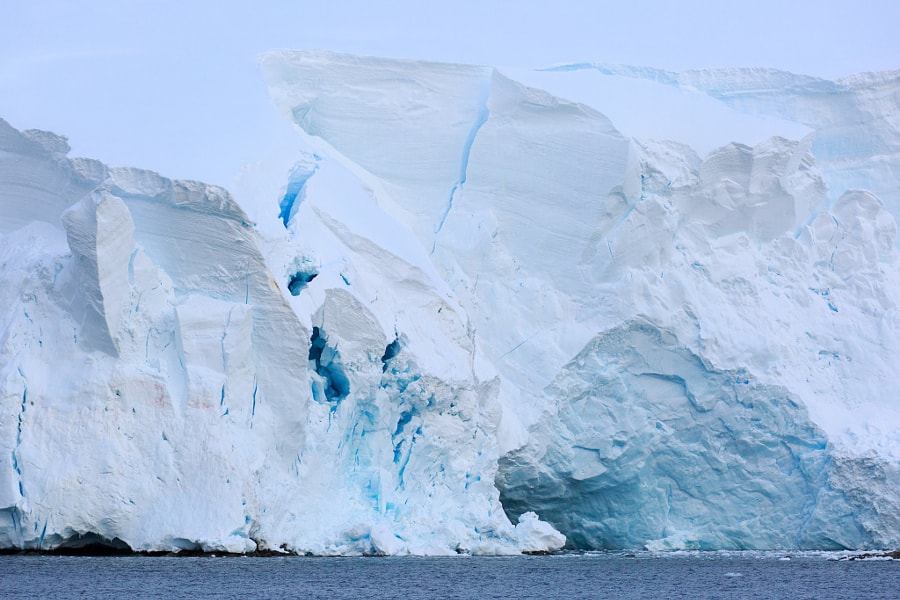
Both polar ships use an Ulstein X-BOW hull and carry a PC5 ice classification — a full class above the PC6 rating on Oceanwide’s Hondius and Janssonius, and the highest in this comparison. In practice that buys access to heavier ice and a longer shoulder season. Lindblad also operates the older National Geographic Explorer (148 guests) and Orion (102 guests) on some polar and expedition routes; both are capable but predate the 2020 pair, and the guest experience is noticeably different.
Detailed Ratings
Scored across 6 criteria against the 4 operators in our comparison
Full Review
The Oldest Name in Expedition Travel
Lindblad Expeditions descends directly from the origins of the category. Lars-Eric Lindblad ran the first commercial tourist voyage to Antarctica in 1966; his son Sven-Olof Lindblad founded the present company in 1979. The National Geographic Society alliance began in 2004 and is not a licensing deal for the ship names — it funds shared scientific and media programs, places National Geographic photographers and explorers aboard, and channels a share of revenue into conservation work. This history is why Lindblad’s onboard programming reads as an institution rather than an amenity.
The Undersea Program
The single feature that separates Lindblad from every other operator in this comparison is the undersea specialist. Each polar voyage carries a dedicated diver-scientist who operates a remotely operated vehicle capable of working several hundred metres down, a drop camera, and a hydrophone for recording whale and seal vocalisations. Footage shot during the day is edited and presented to guests the same evening. On no other ship here can you watch benthic life from below the ice you walked on that morning. If your interest in polar travel is biological rather than scenic, this is the operator.
Photography
Lindblad carries certified photo instructors on every departure and National Geographic photographers on many, running in-field coaching, one-to-one image reviews and evening workshops. Both polar ships have dedicated video-microscope and photo-workspace facilities. This is a materially more developed program than the “photographer aboard” arrangement common elsewhere in the segment, and it is the most frequently praised item in Lindblad guest reviews after the expedition team as a whole.
Field Time: Good, Not Class-Leading
Our Time Ashore criterion puts Lindblad at 6.9 hours per active expedition day. That is a full hour above Oceanwide and well within the strong band for the segment, but 1.3 hours behind the leader. The reason is a deliberate programming choice: Lindblad spends more of the day on ship-based interpretation — lectures, ROV screenings, photo reviews, bridge and open-deck wildlife watching — than operators whose entire proposition is landing volume. Whether that is a weakness depends on what you came for. Reviewers who wanted maximum boots-on-ground time say so; the larger group rates the trade positively.
Onboard and Cabins
Endurance and Resolution are the most comfortable ships in this comparison. All cabins are outward-facing, most have balconies, and the top categories run to two-room suites with sizeable verandas. Both ships carry two restaurants, a glass-domed observation lounge, an infinity-style hot tub at the stern, saunas with sea views, an igloo option for sleeping on deck under the polar sky, and a full science hub. Service style is closer to a small luxury ship than to a working expedition vessel — which is precisely the distinction Oceanwide guests should weigh before comparing headline fares.
What You Are Actually Paying For
At $11,500 entry against Oceanwide’s $6,200, the premium is $5,300 per person on a comparable Antarctic Peninsula voyage. In return: a PC5 rather than PC6 hull, a balcony instead of a quadruple-share porthole, the undersea and photography programs, a 1:10 rather than 1:14 guide ratio, and one additional hour ashore per day. Lindblad also bundles more into the fare than its competitors — kayaking, most gear, gratuities on many departures, and in some cases charter flights within the itinerary — so the gap narrows once you total the extras. It does not close.
Who Should Book
Book Lindblad if you want to understand the polar regions rather than simply visit them, if photography is a primary motivation, or if you want the most capable ice class and the most comfortable cabins in this group. Do not book Lindblad if maximum hours ashore per dollar is the metric that matters — Poseidon delivers 1.3 more hours per day for $3,700 less — or if your budget sits below roughly $10,000 per person, in which case Oceanwide and Aurora are the realistic choices.
Itineraries
Polar seasons plus a global expedition program
Antarctica: Journey to the Peninsula
13–14 days • Nov – Feb
Buenos Aires and Ushuaia embarkation, Drake Passage, Peninsula and South Shetlands. Undersea ROV program, photo instruction, kayaking included on most departures.
From $11,500 pp
South Georgia & Falklands
23–24 days • Oct – Jan
The full South Atlantic sequence: Falklands, South Georgia’s king penguin megacolonies and elephant seal beaches, then the Antarctic Peninsula. Extensive research programming.
From $24,000 pp
Svalbard & the Pack Ice
10–12 days • Jun – Aug
Longyearbyen round trip pushing north to the ice edge. PC5 hull allows deeper ice penetration than most competitors. Polar bear, walrus, and beluga observation with hydrophone work.
From $12,900 pp
Northwest Passage
24–26 days • Aug – Sep
Greenland to the Canadian High Arctic and the Beaufort Sea, weather and ice permitting. Inuit communities, Franklin expedition sites, narwhal and muskox. Among the few commercially sold transits.
From $29,000 pp
Pricing: Cabin Categories, 13-Day Antarctic Peninsula
National Geographic Endurance / Resolution, per person double occupancy. Indicative — verify with operator.
| Cabin Category | Price (pp) | Size | Features |
|---|---|---|---|
| Category 1 Solo / Window | $11,500 | ~20 m² | Main deck, picture window, en-suite |
| Category 3 Balcony | $14,900 | ~24 m² | Private balcony, sitting area |
| Category 5 Balcony | $18,400 | ~28 m² | Upper deck, larger balcony |
| Suite | $21,500 | ~40 m² | Separate lounge, veranda |
| Two-Room Suite | $24,000 | ~50 m² | Top deck, wraparound veranda |
Lindblad bundles more into the fare than most competitors: meals, landings, kayaking, most gear, and gratuities on many departures, with charter flights included on some itineraries. Compare totals rather than headline fares when weighing Lindblad against Oceanwide or Aurora.
Pros & Cons
Pros
- Best science program in our comparison — ROV, drop camera, hydrophone
- National Geographic photographers and certified photo instructors aboard
- PC5 ice class — highest here, deeper ice access
- Most comfortable cabins: outward-facing, mostly with balconies
- 4.6/5 guest score — second-highest in our study
- 1:10 guide ratio plus specialist staff beyond the count
- More inclusions in the base fare, including gratuities on many departures
Cons
- $11,500 entry — 85% above Oceanwide for a comparable voyage
- 6.9 hrs ashore/day trails both Poseidon and Aurora
- Programming skews to ship-based interpretation over landing volume
- Older Explorer and Orion deliver a different, dated experience
- No Ross Sea or helicopter-supported emperor penguin program
- Peak departures book 18+ months out
Lindblad vs Oceanwide Expeditions
Direct comparison on the metrics that determine expedition quality
| Metric | Lindblad Expeditions | Oceanwide Expeditions | Advantage |
|---|---|---|---|
| Overall Score | 4.3 / 5 | 4.1 / 5 | Lindblad +0.2 |
| Time Ashore/Day | 6.9 hrs | 5.9 hrs | Lindblad +17% |
| Guest-to-Guide Ratio | 1:10 | 1:14 | Lindblad +40% guide density |
| Guest Score | 4.6 / 5 | 4.0 / 5 | Lindblad +0.6 |
| Ice Class (polar pair) | PC5 | PC6 (Hondius, Janssonius) | Lindblad |
| Science & Photography | ROV, Nat Geo media, photo instructors | Standard naturalist program | Lindblad |
| Entry Price (12–13 day) | $11,500 | $6,200 | Oceanwide $5,300 cheaper |
| Rare Itineraries | Northwest Passage | Ross Sea, Weddell Sea by helicopter | Split — different rarities |
Frequently Asked Questions
Is Lindblad Expeditions worth the price over Oceanwide?
It depends entirely on what you value. The $5,300 per-person premium buys a PC5 hull, a balcony cabin instead of a quadruple-share porthole, one extra hour ashore per day, a 1:10 guide ratio, and the undersea and photography programs no competitor here matches. If your goal is to understand what you are looking at, that is defensible. If your goal is maximum field hours per dollar, it is not — Poseidon delivers 8.2 hours ashore for $7,800.
What is the National Geographic partnership, really?
An alliance running since 2004, not a naming licence. It places National Geographic photographers, explorers and researchers aboard, funds shared science and media programs, and channels a revenue share into conservation work. The practical result for guests is programming depth: ROV screenings, research participation, and photographic instruction that operate as institutional programs rather than one-off amenities.
What does the undersea specialist actually do?
Each polar voyage carries a dedicated diver-scientist operating a remotely operated vehicle that works to several hundred metres, plus a drop camera and hydrophone. Footage and audio are captured during the day and presented to guests the same evening — benthic life, ice underside structure, whale and seal vocalisations. No other operator in this comparison offers an equivalent program.
Which Lindblad ship should I choose for Antarctica?
National Geographic Endurance (2020) or Resolution (2021) — identical PC5 X-BOW sisters with 126 guests, and the ships this review scores. Lindblad also runs the older National Geographic Explorer (148 guests, 1982 build extensively refitted) and Orion (102 guests, 2003) on some routes. Both are capable, but cabins, stability and facilities are a clear step behind the 2020 pair. Confirm the assigned vessel before booking.
How far in advance should I book?
Eighteen months for peak Antarctic departures and for the Northwest Passage, which sells out earliest of anything in the program. Svalbard is somewhat easier at nine to twelve months. Balcony categories and solo cabins go first regardless of destination.